
child-centred play therapy

You’ve been in firefighting mode for a while now.
Are you stressed and confused…
- Feeling overwhelmed because they always seem angry, anxious, or sad?
- Lying awake at night, worried about their response to a recent challenge or trauma?
- Wondering if you’re doing the right thing for your kids?
I’ve been working with children for nearly a decade, in various capacities.
After my Master’s in Counselling and PGDip in Counselling Psychology, I travelled between Australia and Singapore to complete a specialisation in child-centred play therapy (also known as CCPT).
Children who go through a full run of child-centred play therapy (CCPT) emerge living better and happier lives,
And the research shows that parents and teachers feel the same. This can happen in as little as 10 weekly sessions.
Many different research projects have been carried out.
They show that CCPT yields positive results with a range of children – *angry/aggressive kids, anxious kids, autistic kids (I intentionally use identity-first language, which many neurodivergent people prefer as well). CCPT therapists understand child development and are trained to attune to children, respond therapeutically to what they express in the moment, and help them use play to process their experiences, needs, and desires.
* Click to view the peer-reviewed articles.
I’ve also compiled a longer list that you can find under the “Research” tab.
CCPT is well-suited to kids who struggle with big emotions/behaviours due to past or ongoing events in their life.
(This could involve losing a loved one, experiencing sibling rivalry, getting into an accident, being bullied, facing medical issues, or undergoing family changes like divorce or migration).
Even if your child is frequently angry, defiant of authority, and hates following the lead of any adult, they will receive a freedom AND clear limits that help them to succeed in CCPT and move past this stage of anger and aggression. And if your child is highly anxious and too scared to trust most newcomers in their life, the consistent acceptance and assurance they receive in CCPT, and the space and time to make their own choices, will support them to build their self-confidence from the inside out.
It might sound too good to be true in our modern times of top-down approaches, but science supports these findings.
The research findings are backed up by what we know about neurobiology. (1) Safe attachment changes parts of our brain which improve learning, and (2) Play is the best way for most children to learn, and to make changes that stick in the long-term!
For $1650, you get a full suite of child-centred play therapy sessions to help your child overcome their difficulties.
- Intake interview (1.5 hours) – $150.
- 10 CCPT sessions (50 min) – $150 each.
- 2 parent consults (up to 50 min) – $Free of charge when you purchase the bundle. After every five CCPT sessions, we have parent consults to check in, offer support, and share progress. These are critical; children get better results when we work together as a team.
If your child requires more sessions, I am committed to giving them the support they need to fully integrate and internalise a more masterful and healthy way of living. Hence, all subsequent CCPT sessions are offered at an extremely affordable fee of $120 each, with free-of-charge parent consults every five to six CCPT sessions.
I have only three openings for the first quarter of 2026, so please reach out if you’d like to save a spot for your child.
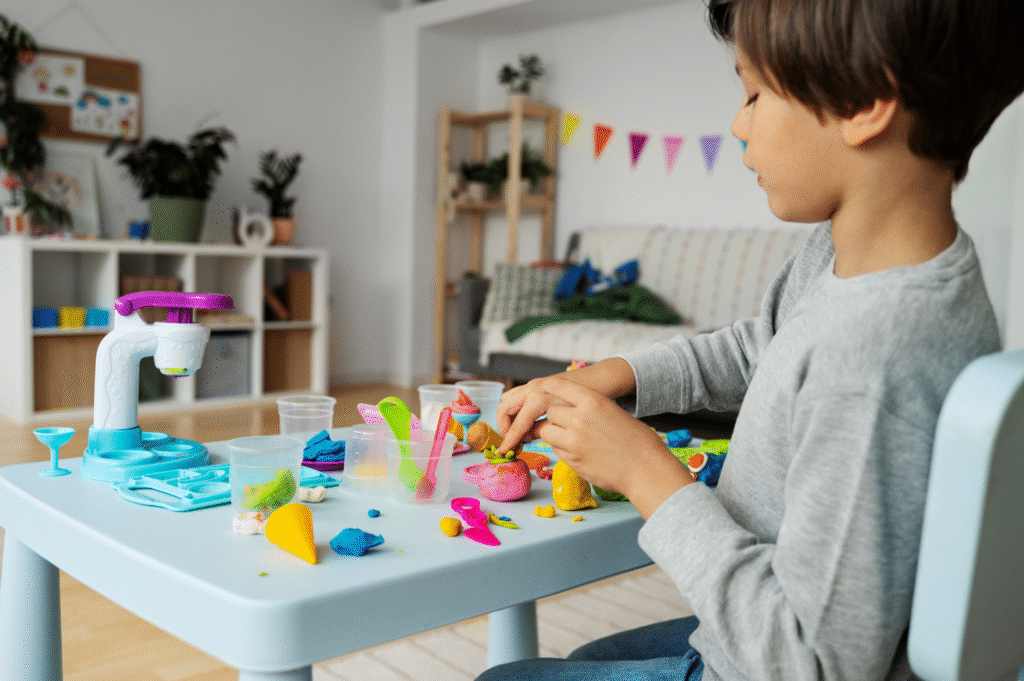
What is Child-Centred Play Therapy?
As children grow, they pass through key stages of development. It’s natural for them to undergo changes in their thinking, mood, and behaviour. At times, it can be tricky for parents to know if their child’s experience is part of typical develpment, or a sign of a deeper issue that should be addressed. Consulting with a clinician specialised in working with children can offer valuable support.
Child-Centred Play Therapy (CCPT) is one of the oldest and most well-researched forms of child counselling. CCPT is attachment-based and, unlike talk therapy, allows the child to address and overcome their struggles using play – their natural language.
CCPT is especially helpful for younger children, and allows them to process challenging feelings, needs, and experiences, develop stronger self-esteem, and learn healthier ways of being that translate into long-term, positive changes in real life.
Who Is It For?: Common Focus Areas in CCPT
CCPT is an effective intervention for kids aged 4 to 10, who struggle with anger, anxiety, or trauma. This includes children who may be experiencing:
- Angry outbursts, fights
- Frequent meltdowns (e.g. screaming, fighting, sobbing)
- High anxiety (e.g. strong need for control, bedwetting, separation anxiety)
- Family stressors (loss of parent, divorce, siblings)
- Past traumatic experience (accidents, loss, neglect, etc.)
Outcomes of CCPT
After completing through a course of CCPT, children’s symptoms of anger, anxiety, and/or post-traumatic stress are greatly improved, and they have stronger self-esteem and better interpersonal relationships. Some specific behavioural and emotional improvements include:
- Better relationships with parents, teachers, and peers
- Better problem-solving capabilities
- Improved emotional and behavioural self-regulation
- Higher self-esteem and self-confidence
- Fewer fights
- Fewer meltdowns (‘tantrums’)
- Reduced anxious behaviours
What Happens During CCPT
CCPT takes place one-on-one between the therapist and the child.
🔹 First Few Sessions (Building Trust): The therapist holds a warm, accepting space in which children feel safe and in control. Children learn that they can lead the way, and that there is no pressure to talk about about their problems.
🔹 Middle Sessions (Exploring & Processing Emotions): As trust is built, children begin to express their struggles. They may play out their experiences, test limits, and experiment with new ways to handle their emotions. As children work through big feelings, parents sometimes notice a temporary regression in behaviors — this is an important part of the process and parents will be supported and resourced through this period.
🔹 Later Sessions (Resolving & Generalising): Children have developed new strategies for self-regulation and begin to internalise and use them in more areas of life. With this stabilised sense of emotional mastery, they demonstrate stronger problem-solving skills and self-esteem. Play themes often shift, and the need for therapy decreases.
What Makes CCPT Especially Effective
- Developmentally appropriate and responsive to unique needs
- Taps on kids’ natural language – play
- Based on neurobiology – builds secure attachment that they need for growth
- Kids get to make choices – developing self-efficacy and self-regulation
- Kids have higher neuroplasticity before they grow into adolescents and adults!

Adeline Chang
I’ve worked with children for nearly a decade. supporting their growth and development – across special education, music education, preschool teaching, forest school coaching, and counselling and play therapy. I’m dedicated to helping children overcome their anger, anxiety, and past trauma, so that families can heal.
Each child has their unique strengths, temperaments, neurotypes – and they universally blossom when met with deep understanding and well-established safety (which includes rules!). Understanding child development and the neurodiversity paradigm gives us clear paths forward, and can soothe much of the anxiety that parents face as their kids grow.
With this foundation, I have helped support children from all kinds of backgrounds integrate their big experiences and emotions. I work with both local and expat kids, neurodivergent and neurotypical, around challenges with traumatic experiences and with anger, aggression, impulsivity, anxiety, or depression.
Though I work one-on-one with kids when doing CCPT, parents and familiies are always part of the process – in working together, we enhance children’s progress and create more sustainable, long-term shifts. In Filial Therapy, this impact is supercharged as I work directly with parents and empower them to become the agents of therapeutic change for their children.
With the support of evidence-based child therapy, stressed and worried parents can finally come out of firefighting mode, feel empowered to rebuild precious connections, and nurture the loving and joyful family they’ve always wanted.
Education:
+ Master of Counselling
+ Postgraduate Dip in Counselling Psychology
+ Bachelor of Arts with Honours (Distinction) (European Studies, Sociology)
Certifications:
+ Child Centred Play Therapy (Child Centred Australia)
+ Filial Therapy (Child Centred Australia)
+ Tension & Trauma Releasing Exercises (TRE®️) (TRE For All, USA)
+ Satir Transformational Systemic Therapy L1 (Satir Pacific, Canada)
+ Emotional Freedom Techniques (EFTi, UK)
Registration:
+ Provisional Clinical Member (Singapore Association for Counselling)
+ Provisional Member (Association for Play Therapy Singapore)
+ Register of Play Therapists (Child Centred Australia)

I sought support because my son struggled to manage and express his emotions, and was very temperamental with meltdowns. At school, he often clashed with teachers and friends. It was a very stressful time for us. After he went through weekly play therapy, I saw improvements emotionally and mentally; he can now express his emotions more freely and self-regulates better. He no longer has meltdowns! My son really enjoyed the weekly play therapy and at first refused to stop the sessions when things were better. I also found my monthly call with Adeline very helpful, where she checked in with me and updated me on my child’s progress. Adeline is very approachable, gentle yet firm, and friendly. I would recommend her to any parent looking for child counselling or play therapy!

CCPT Evidence:
A short compilation of research articles investigating the efficacy of CCPT.
CCPT with elementary children improved aggression, self-reg, empathy (2018)
- Intensive CCPT with kids aged 6 to 9 significantly reduced externalising behaviours (2017)
CCPT with children with intellectual disability, improved hyperactivity and irritability (2014)
CCPT of 14 sessions with elementary-aged children reduced aggressive behaviours (2009)
CCPT with children aged 6 to 8, significantly decreased anxiety and worry (2015)
Group CCPT with kids aged 2.5 to 4, reduced separation anxiety and increased prosocial behaviours (2023)
CCPT with ADHD children improved cognitive flexibility (2023)
CCPT with autistic children improved social domain scores (2024)
CCPT of 26 sessions with elementary children improved academic achievement scores (2012)
CCPT with first grade students reduced performance anxiety and improved academic achievement (2015)
CCPT with kids with 2 or more ACES, increased socioemotional abilities & reduced behaviour problems (2021)

- Are you tired of constantly clashing with your child?
- Feeling overwhelmed because they always seem angry, anxious, or sad?
- Lying awake at night, worried about their response to a recent challenge or trauma in the family?
Your child can overcome their challenges without being coerced or feeling like they’re the problem. We pave the way to inside-out change by speaking their natural language – play!
Free 20 min consult
Share your story and I'll tell you if CCPT can address your child's specific challenges.

Adeline Chang
Counsellor & Play Therapist
About Me
I’ve been dedicated to children for nearly a decade, working as teacher (special education/piano/preschool), coach and facilitator (forest school), and counsellor. In my free time, I like reading books, taking walks in nature, and geeking out on languages and movies.
Join me as I support you and your child, so they become more resilient, confident, and heal from the inside out.